
Damaged Skin from Exfoliation: How to Calm Irritation and Restore Your Skin
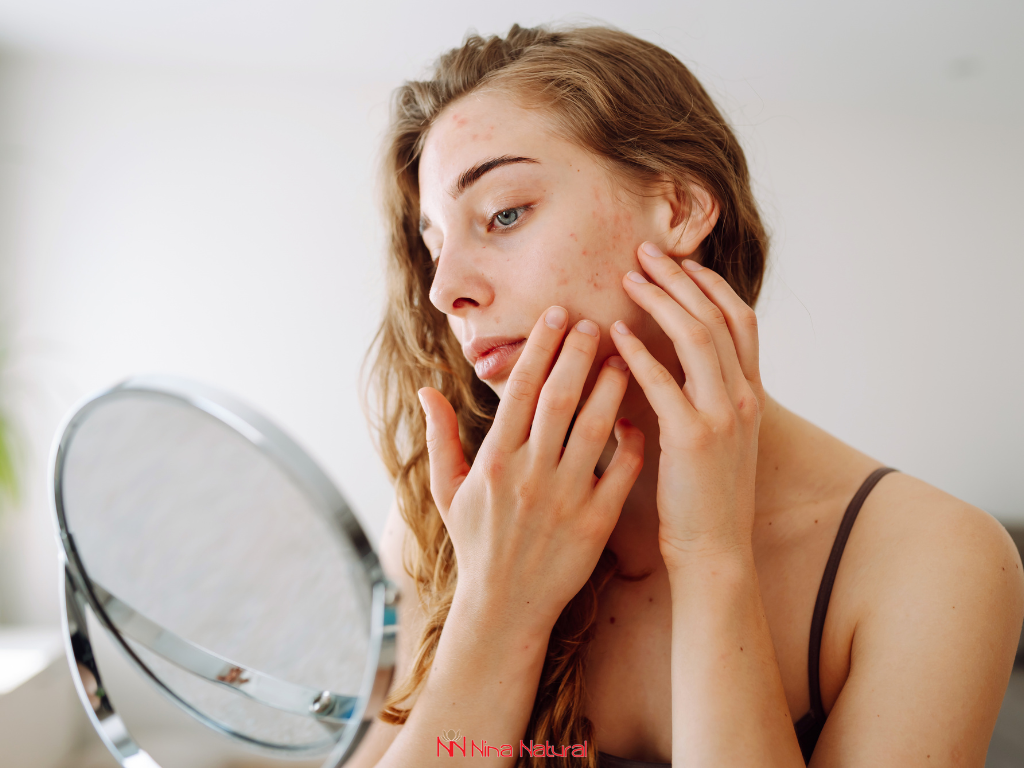
Exfoliants exist to remove dead skin cells from the surface of the face or body and help the skin look brighter, smoother, and fresher. When used properly, that’s exactly what they do.
But when certain limits are crossed like too much rubbing, too much acid, exfoliating too often, or using the wrong product for your skin type the very same process that was supposed to help starts breaking down something called the skin barrier.
The skin barrier is the outermost layer of the skin, technically known as the stratum corneum. Think of it as a protective wall that keeps your skin hydrated, defends it from bacteria, allergens, and UV rays, and prevents moisture from evaporating.
When that wall gets damaged whether by friction (mechanical exfoliation) or acids (chemical exfoliation) the skin is left literally unprotected. It reacts the way any unprotected tissue would: with redness, burning, dryness, flaking, and sometimes even blisters or a rash.
This isn’t a guide on pretending nothing happened. This is a step-by-step plan for what to do from the moment the damage occurs.
Types of Exfoliation (because they’re not all the same)
Before explaining how each type can damage the skin, it’s important to understand the difference between the two main categories: mechanical and chemical exfoliants. Each category includes several types, and each damages the skin in a different way so the symptoms look different too.
Mechanical (physical) exfoliants
Mechanical exfoliants remove dead skin cells by physically scraping them off the surface of the skin. Every mechanical exfoliant contains some kind of abrasive particles or surface that literally rubs against the skin.
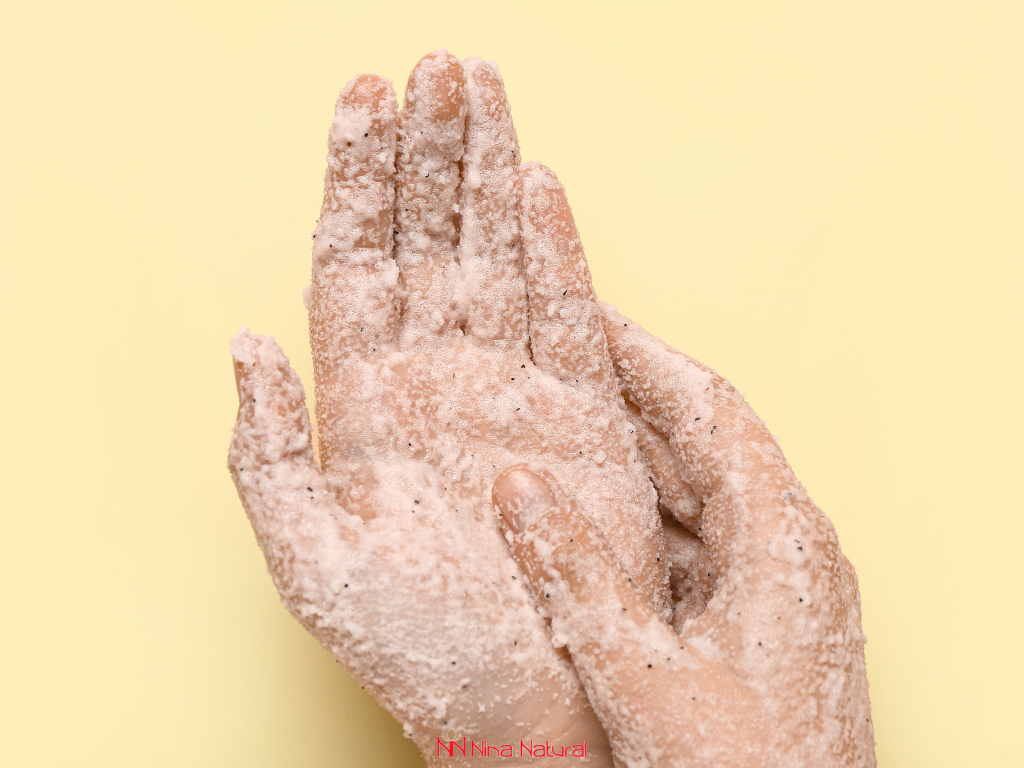
1. Scrub products: sugar, salt, apricot kernels, plastic microbeads
These are creams, gels, or pastes that contain small solid particles. On the label, you’ll see ingredients like Sucrose (sugar), Sodium Chloride (salt), Prunus Armeniaca Shell Powder (ground apricot kernels), Walnut Shell Powder (ground walnut shells), or Polyethylene (plastic microbeads, now banned in the EU).
Homemade sugar or salt scrubs fall into the same category.
What damage from scrub products looks like
Damage develops gradually, especially if the scrub is used several times a week. The skin becomes increasingly red and sensitive after each use, but many people misinterpret this as normal reaction and keep going. Symptoms include: persistent redness, stinging during and after use, tiny red bumps (which look like acne but aren’t), dryness and flaking that doesn’t improve no matter how much moisturizer you apply, and increased sensitivity to sunlight, water, and even gentle lotions.
2. Electric facial brushes and silicone brushes
Electric facial brushes or silicone brushes, which mechanically cleanse and exfoliate the skin through vibration or rotation, can also cause damage if not used properly.
What damage from an electric brush looks like
Overuse for example, using it every day or more than twice a week leads to classic barrier damage. The skin looks shiny and smooth for the first few days, and then it starts becoming “reactive”: it turns red in response to almost anything you put on it, dries out, and starts to sting even during cleansing.
3. Sponges
For example, the konjac sponge (made from the plant fiber of Amorphophallus konjac) is a gentle mechanical exfoliant most often used for daily cleansing. On its own, it’s mild—but it’s not harmless if used aggressively every day, with pressure and strong rubbing, especially on dry or sensitive skin.
What damage from exfoliating sponges looks like
Milder than with scrubs. The skin becomes pink, tight after washing, and dry in areas like the cheeks and nose. There’s also stinging after applying toners or serums that normally don’t irritate the skin.
Chemical Exfoliants
Chemical exfoliants don’t scrub the skin—they use acids or enzymes to chemically dissolve the bonds between dead skin cells and speed up their shedding. This makes them more effective than mechanical exfoliants, but also potentially more dangerous if not used properly, because there’s no immediate visual feedback like you get with “scrubbing.” In other words, you don’t really know how much damage the acid has done until it’s already too late.
4. AHA acids (alpha hydroxy acids)
AHA acids are water-soluble and work on the surface of the skin. The most common ones are:
- Glycolic Acid: the smallest molecules, penetrates the fastest, and is the strongest in this group.
- Lactic Acid: larger molecules, milder, and also hydrating.
- Mandelic Acid: the largest molecules, penetrates the slowest, good for sensitive skin types.
What damage from AHA acids looks like
Using them too often (for example, AHA every night or several times a week) leads to gradual barrier damage: the skin becomes dry and starts to flake. It can also look very shiny and thin—but actually so thinned out that it stings when you apply almost any product and reacts with redness to the sun even when you’re using SPF. This is a form of so-called “Over-exfoliation.”
Using too high of a concentration at once (for example, attempting a 30% or 50% glycolic acid chemical peel at home without experience) can cause real chemical damage: intense redness, burning that doesn’t go away, blisters, followed by skin peeling in chunks. This is absolutely a situation where you need to see a dermatologist as soon as possible.
5. BHA acids (beta hydroxy acids – salicylic acid)
The only BHA used in cosmetics is Salicylic Acid. It’s oil-soluble, which means it penetrates deeper into the pores than AHAs and works especially well for oily skin, enlarged pores, and acne. Concentrations in cosmetic products typically range from 0.5% to 2%.
What damage from salicylic acid looks like
Damage from salicylic acid usually comes from overuse – for example, using it every day or multiple times a week – rather than from a single application, since cosmetic concentrations are limited. The skin becomes dry and flaky, especially around the nose and chin. Small bumps (papules) can appear that look like acne, and in more severe cases, the skin becomes very thin, shiny, and reactive to everything – even cold or warm water.
6. PHA acids (polyhydroxy acids)
Gluconolactone and Lactobionic Acid are PHA acids and represent the gentlest form of chemical exfoliation. They have very large molecules that penetrate the skin slowly, and one of their byproducts is hydration.
What damage from PHA acids looks like
PHAs are so gentle that damage from using them alone is rare. However, if they are combined with other acids or retinoids, they can contribute to overall overload. Symptoms are the same as mild over-exfoliation: dryness, red patches, and increased sensitivity.
7. Enzyme exfoliants (papain and bromelain)
Enzyme exfoliants use proteins derived from fruit: Papain (from papaya) and Bromelain (from pineapple), which literally break down proteins in dead skin cells. They are milder than acids but not harmless.
What damage from enzyme exfoliants looks like
Similar to AHA damage, redness, stinging, and dryness. A specific issue can be an allergic reaction to papain or bromelain (not just irritation from exfoliation, but a true allergy), which presents as hives, swelling, and intense itching. If that happens, it’s no longer a topic for this guide—it requires antihistamines and a doctor.
8. TCA and Jessner peels (professional chemical peels)
Trichloroacetic Acid (TCA) and Jessner Solution (a combination of salicylic acid, lactic acid, and resorcinol in ethanol) are medium to deep chemical peels performed exclusively in dermatology clinics or serious medical centers. TCA concentrations of 15–35% remove the surface or even mid-level layers of the skin.
What damage from TCA and Jessner peels looks like
A normal reaction after a professional TCA peel includes redness, tightness, and peeling in large sheets 3 to 7 days after the treatment. Damage looks like this: white or gray “frosting” that shouldn’t have happened, deep wounds instead of surface peeling, fluid-filled blisters, skin that looks wet or weepy, and intense burning that lasts longer than 30 minutes without stopping.
Early Signs of Damage: How to Recognize Them in Time
This is a list of “signals” your skin sends when exfoliation is too aggressive or too frequent. It’s important to recognize them early, because the longer you continue with the same routine after these symptoms appear, the slower the recovery will be.
Redness that doesn’t go away
The skin stays pink or red for more than 24 hours after mechanical exfoliation, or more than 48 hours after chemical exfoliation. It’s not just a small area—your entire face (or the area where the exfoliant was applied) has changed color.
Stinging
Applying hydrosol, toner, serum, or even plain water causes stinging. This is a clear sign that the skin barrier is compromised.
Unusual dryness and tightness
Right after washing, your skin feels like paper—even if you apply moisturizer. It looks similar to sunburn, meaning dryness that doesn’t respond to hydration.
Flaking and peeling
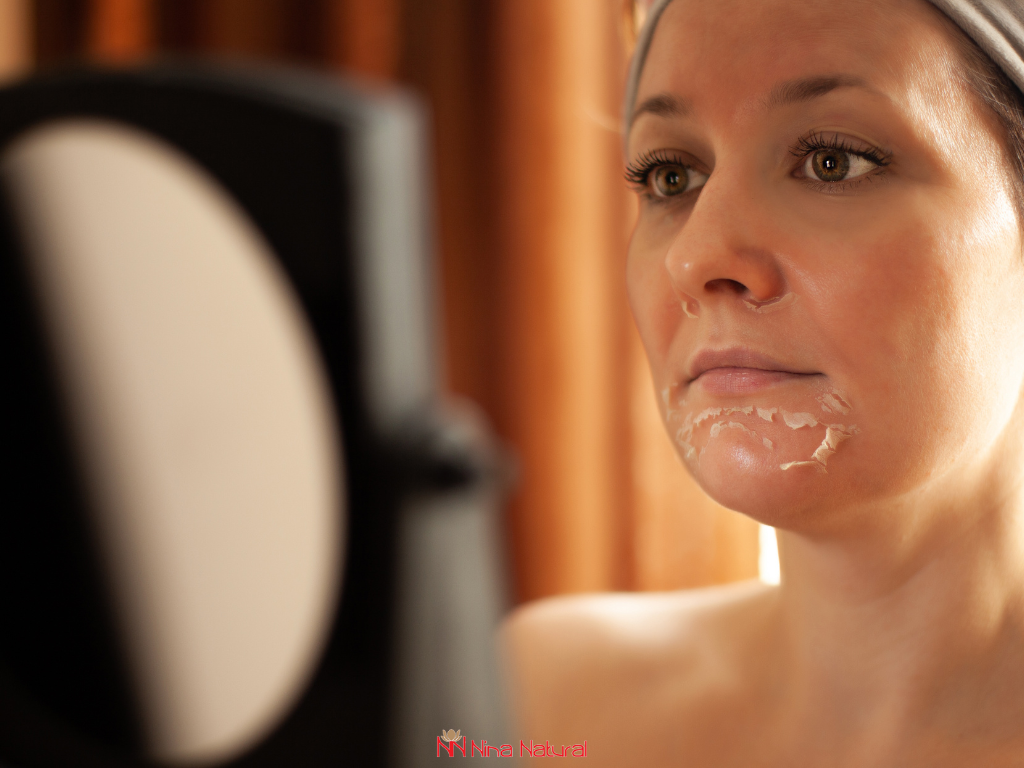
Skin starts flaking or peeling, especially around the nose, mouth, chin, and forehead. With chemical exfoliation, this can happen in larger pieces.
Skin that is constantly “wet”
The skin releases a clear fluid, or in more severe cases, a yellowish fluid. This is not sweating this is damaged tissue. Seek medical help immediately.
Blisters
Fluid-filled bubbles or larger blisters. This indicates a chemical burn or very serious mechanical damage. Seek medical help immediately.
Small red rash or bumps
Papules that look like acne but aren’t they appear suddenly, in a uniform pattern, after treatment. Most often, this is inflamed hair follicles or contact dermatitis.
Increased sensitivity to sunlight
The skin turns red faster than usual when exposed to the sun, even after short exposure. A clear sign that the skin’s protective mechanisms are compromised.
Caring for Damaged Skin Over the Next 7 to 14 Days
This is the recovery period. The only thing expected from you during these days is to take care of your skin and give it time along with a few appropriate skincare products to repair itself.
This is not the time for experimenting, not the time for new products, and not the time to try to “fix” the damage or speed up the process.
The entire goal of your routine during this period is one thing: to restore and protect the skin barrier.
1. Cleansing (only with gentle products, lukewarm water)
Set aside cleansers with active ingredients, as well as those containing sulfates, alcohol, fragrances, or exfoliating particles. Instead, look for cleansers labeled “gentle,” “sensitive,” or “micellar.”
Wash your skin using light, circular motions, without rubbing. Water temperature should be lukewarm not cold, not hot. Dry your face by patting it gently with a soft towel, not rubbing.
2. Hydration, immediately after cleansing, while the skin is still damp
One of the most important steps: applying hydration before the skin dries out. You can use a gentle, alcohol-free toner or apply a hydrating serum directly.
At this stage, you can look for these ingredients:
- Hyaluronic Acid: draws moisture from the air into the skin.
- Panthenol (Provitamin B5): soothes and supports skin barrier repair.
- Allantoin: calms irritation and promotes regeneration; commonly found in pharmaceutical creams.
- Niacinamide (up to 5%): helps restore the barrier and reduce redness. However, if your skin is still stinging, niacinamide might not feel comfortable right away wait a day or two before introducing it.
3. Face cream: focus on ceramides and barrier repair
During recovery, look for a face cream with a simple and minimal formula. On the label, you should see some of these ingredients:
- Ceramides (listed as Ceramide NP, Ceramide AP, Ceramide EOP, etc.): essential components of the skin barrier that help rebuild it.
- Panthenol (Provitamin B5): soothes irritation and supports healing.
- Hyaluronic Acid (or Sodium Hyaluronate): helps retain moisture in the skin.
- Allantoin: calms and supports regeneration; often found in pharmacy-grade creams.
If you prefer more natural skincare, look for creams that combine soothing ingredients with simple formulations.
For example, lightweight but nourishing creams with immortelle (helichrysum), panthenol, and plant oils can help calm irritation and restore the skin without adding extra stress.
The cream should be fragrance-free (no “Parfum” or “Fragrance” on the label), alcohol-free (Alcohol Denat-free, ethanol-free), and free of exfoliating ingredients. The texture can be creamy or rich in this phase, that’s an advantage, not a downside. The simpler the formula and the shorter the ingredient list, the better.
4. SPF: Every Day, Even When You’re at Home
Damaged skin is significantly more sensitive to UV rays. UV exposure creates free radicals that slow down barrier recovery and can cause hyperpigmentation (dark spots) in areas where the skin was irritated. Sun protection is not optional it’s essential.
You should look for SPF 50 with mineral (physical) filters. On the label, this means you’ll see ingredients like Zinc Oxide or Titanium Dioxide. These ingredients sit on the surface of the skin and protect it by reflecting UV rays, unlike chemical filters that penetrate the skin and may further irritate an already compromised barrier.
If you can’t find a purely mineral sunscreen, you can use a hybrid one (containing both mineral and chemical filters), but pay attention to how your skin reacts.
The same rules apply as with your moisturizer: fragrance-free, alcohol-free, and with as simple a formula as possible. Apply it every morning as the last step of your routine—after your moisturizer, before makeup, or instead of it.
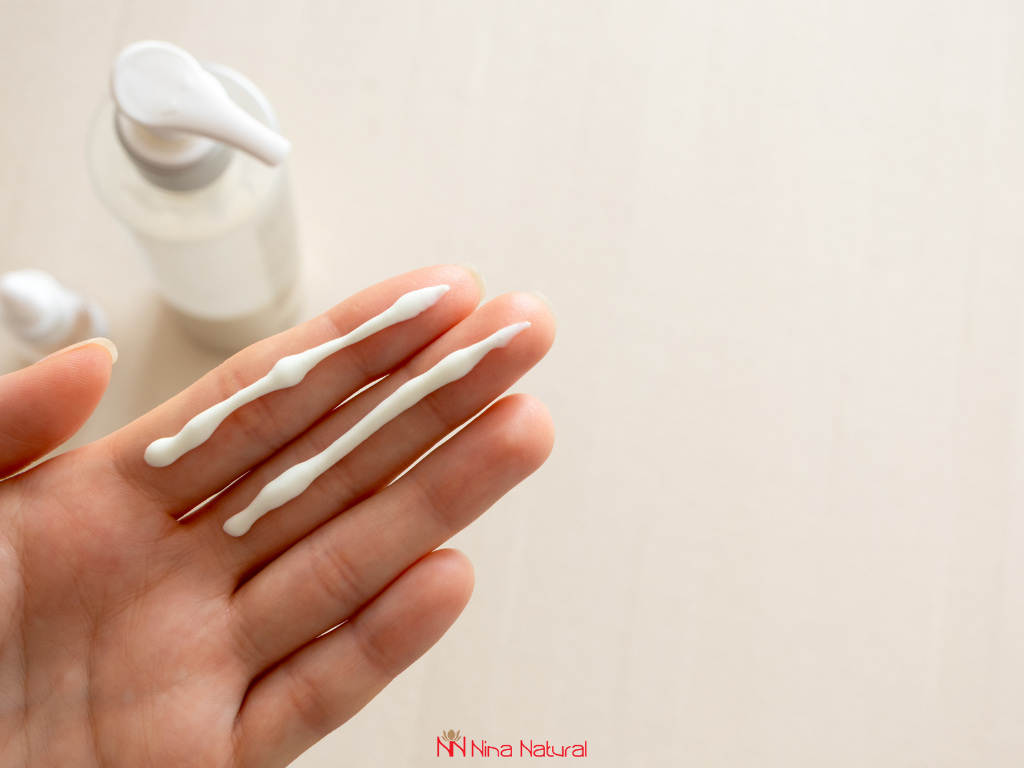
5. Aloe Vera Mask (optional, for soothing the skin)
Aloe vera gel (Aloe Barbadensis Leaf Juice) has proven anti-inflammatory properties and provides a mild cooling effect on the skin. You can apply a thin layer of pure aloe vera gel (without added ingredients, alcohol, or fragrance—check the label) for 10–15 minutes, then gently massage in the remainder or remove any excess.
What to Absolutely Avoid During the Recovery Period
This is just as important as what you should use. Many people instinctively try to “fix the problem” by adding new products at the first sign of a reaction but that only makes things worse.
Any kind of exfoliation – mechanical or chemical. Absolutely not allowed.
No scrubs, no acid toners, no enzyme masks. Not even the “gentle” one you usually use. Your skin needs to regenerate, and any form of exfoliation will only deepen the damage and delay recovery. Wait at least 7 to 10 days before even thinking about reintroducing exfoliants.
Retinol, retinal, and retinoids in any form
Any creams or serums that list Retinol, Retinal, Retinaldehyde, Adapalene, or Tretinoin on the label all of that is on hold until your skin recovers. Retinoids speed up cell turnover, which sounds beneficial, but during recovery they increase irritation and interfere with proper barrier healing.
High concentrations of Vitamin C
Serums with pure Ascorbic Acid are acidic by nature and will be too harsh for damaged skin. Gentler vitamin C derivatives like Ascorbyl Glucoside or Sodium Ascorbyl Phosphate in low concentrations may be okay after 5–7 days, but pure ascorbic acid should be left for later.
Products with fragrance and alcohol
Fragranced creams, toners with ethanol (look for Alcohol Denat, Ethanol, Isopropyl Alcohol on the label), and essential oils all of these further irritate a compromised barrier. Even some “natural” creams with lavender or rose can be problematic during this period.
Hot water
Hot showers and washing your face with warm water dilate blood vessels and increase redness and inflammation. Stick strictly to cool or lukewarm water.

Heavy makeup and pore-clogging foundation
Powder foundations and matte formulas applied with a sponge can physically damage already compromised skin and clog pores where inflammatory processes are taking place. If you have to wear makeup, choose a lightweight liquid foundation and apply it very gently with your fingers no sponge, no brushes.
Picking pimples and peeling off flaking skin
Peeling is part of the recovery process. Pulling, picking, or removing pieces of skin before they are ready to shed on their own can create open wounds and permanent scars.
Sun exposure without SPF protection
Not even brief exposure. Not even on a cloudy day. Damaged skin is prone to hyperpigmentation from UV rays, and those dark spots can last for months. SPF 50 every single day, without exception, until the skin has fully recovered.
Introducing new products you haven’t used before
The recovery period is not the time to try that new serum you’ve been saving or a tone-evening cream. If a reaction happens, you won’t know whether it’s from the existing damage or the new product. Stick to familiar, safe options.
After Recovery: How to Safely Reintroduce Exfoliation
Once your skin has fully recovered no more redness, stinging, or peeling you can start thinking about bringing exfoliants back into your routine. But not at the same pace and not with the same products as before.
Here are a few key principles:
Start with the lowest concentration
If you were using 10% glycolic acid, start with 5% or even 2%. If you were using AHA every night, begin with once a week.
Introduce one product at a time
Add one exfoliant, wait two weeks, and observe your skin’s reaction before introducing anything new.
PHA acids are a great starting point
If you’re unsure, Gluconolactone or Lactobionic Acid are the gentlest forms of chemical exfoliation and a great entry point for skin that’s getting used to exfoliation again.
Mechanical exfoliants can be used sparingly
They can be part of your routine once a week or less. And only choose ones with round, smooth particles not harsh, sharp materials like apricot kernels or walnut shells.
Listen to your skin
If your skin immediately reacts with redness or stinging after exfoliation, it means it hasn’t fully recovered yet, the product is too strong for you, or that particular formula simply doesn’t suit your skin.