
Hair Oils During Winter: Complete Guide
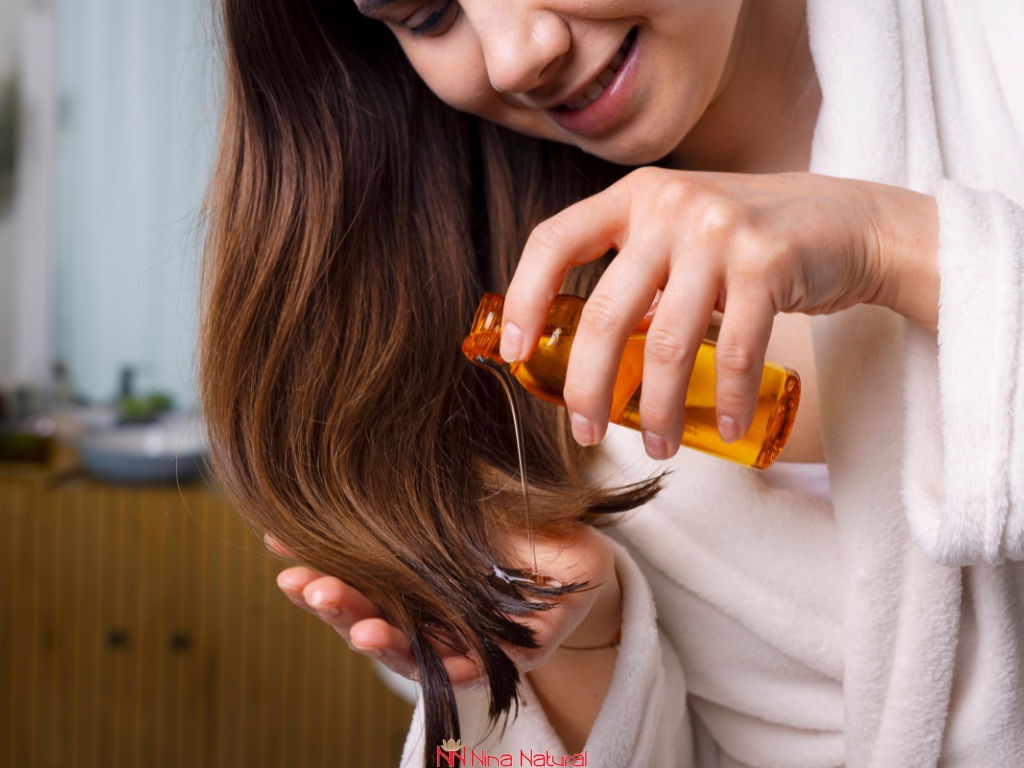
Winter is a period when hair often loses its natural shine and softness. During the cold months, hair can become drier than usual, more prone to breakage, slower to grow, and harder to style.
The reason for these changes isn’t just low temperature. In winter, hair is constantly exposed to a combination of cold outdoor air, wind, dry air in heated rooms, and frequent temperature changes. All of this further exhausts the hair and disrupts its natural balance.
That is precisely why winter hair care should be richer and more carefully adapted to this period. Natural plant-based oils are one of the simplest and most effective ways to keep hair protected, hydrated, and soft throughout the winter.
Why Winter Damages Hair
During winter, hair is exposed to conditions that directly affect its quality. Cold outdoor air naturally contains less moisture, which causes hair to lose its natural hydration more quickly. At the same time, spending time in heated rooms further dries out the air, so the hair strand goes through constant dehydration throughout the day.
When hair is deprived of sufficient moisture, its structure changes. The strand becomes rough, less elastic, and weaker, which increases the risk of breakage. Instead of bending and adapting, hair snaps more easily under pressure, especially during brushing or tying.
In winter, hair is more frequently exposed to external influences such as friction. Wearing hats, scarves, and high-collared jackets creates additional friction that can damage the outer layer of the hair strand. When that layer is compromised, hair becomes more sensitive and susceptible to damage.
The hair’s natural protective layer, which normally helps the strand remain smooth and shielded, is more easily disrupted during winter. Without this protection, hair becomes drier and more prone to splitting, especially at the ends, which are already the most exposed and oldest part of the hair.
How Oils Help Hair During Winter
Plant-based oils play an important role in winter hair care because they help replenish what hair loses during the cold months.
When applied correctly, oils coat the hair strand with a very thin, almost imperceptible layer that slows the evaporation of water from the hair and helps retain natural moisture within the strand. This way, hair stays hydrated and less prone to drying out, even when exposed to cold air and indoor heating.
Certain oils, such as coconut oil, have the ability to penetrate deeper into the hair strand and thereby reduce protein loss from the hair, which is important for its strength and resilience. When hair retains its internal structure, it breaks less and better withstands everyday friction and external influences.
Oils such as argan and almond work primarily on the outer layer of the hair, filling in minor surface damage and increasing its elasticity, which allows hair to more easily withstand bending, tying, and brushing without breaking.
Jojoba oil, which in composition is very similar to the natural oils of our skin, helps preserve the hair’s natural lipid mantle (its protective layer) thereby preventing excessive drying.
Taken together, plant-based oils do not protect hair from the cold in a literal sense, but rather help it retain moisture, elasticity, and strength, which is precisely what hair needs to remain healthy, soft, and resilient throughout the winter.
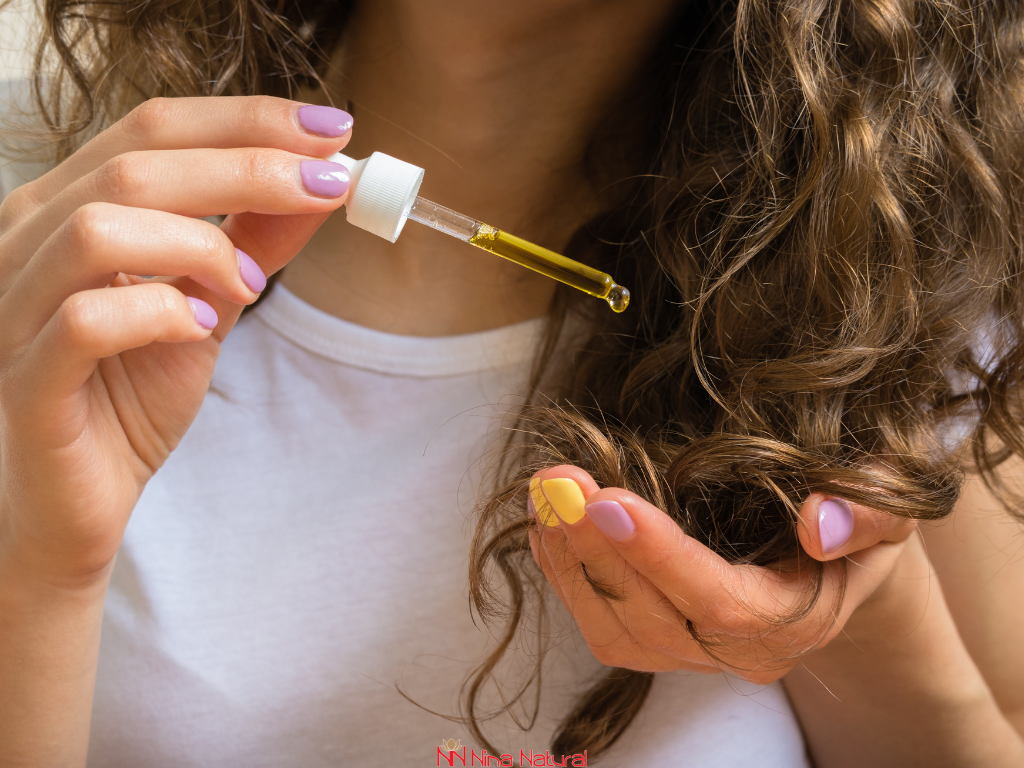
Which Oils Are Best for Hair in Winter
Different hair types respond to oils differently, which is completely normal. Some hair loves richer care, while other hair responds better to lightweight oils that absorb quickly. In winter, it is especially important to listen to how your hair reacts and to adapt your choice of oils to its needs, since cold, dry air, and friction place additional strain on the hair strand.
During the colder months, the following oils stand out as particularly helpful in keeping hair softer and better protected:
Coconut Oil
Coconut oil is well known for its ability to penetrate deeper into the hair strand and help preserve its strength, which is why it is commonly used in the care of dry and damaged hair. When temperatures are low, its role is not only deep nourishment but also everyday protection of hair against drying, cold, and friction.
When used as part of a leave-in hair oil, coconut oil contributes to preserving the structure of the hair strand and improving its overall resilience. In this way, hair retains moisture, becomes smoother, and is more resistant to breakage, especially at the ends.
A very small amount applied to the length and ends is sufficient to keep hair softer and protected without a heavy or greasy feeling.
Coconut oil calls for moderation, especially with finer hair. When used in the right amount and in combination with other lighter oils, it can be an excellent ally in everyday winter hair care.
Argan Oil
Argan oil is often called the king of hair care, especially during the winter months. Its lightweight texture allows for quick absorption without a heavy feeling, making it suitable for various hair types, including fine and color-treated hair.
During winter, argan oil helps hair retain moisture and elasticity, which reduces breakage and split ends. When applied in a small amount to the length and ends, it forms a protective layer that shields hair from dryness, cold, and friction caused by hats and clothing.
Regular use of argan oil helps hair become softer and easier to detangle, without leaving a greasy feel.
This is precisely why argan oil is a common choice for everyday use during the heating season, when hair needs constant but gentle protection.
Jojoba Oil
Jojoba oil is particularly beneficial when hair is exposed to dry air and frequent temperature changes. During the cold months, the scalp often becomes dry, tight, or sensitive due to heating and large temperature swings, and jojoba helps alleviate that feeling.
When applied to the hair, jojoba helps moisture be retained longer, so hair does not look dried out and lifeless. At the same time, it does not leave an unpleasant feeling on the hair or cause it to clump together, which matters when the oil is used more frequently on cold days.
Jojoba is a good choice for both the scalp and the length of the hair. In a small amount, it can be applied directly to the scalp if there is a feeling of dryness or discomfort, and it can also be used only on the ends to keep hair softer and more protected. This versatility is precisely what makes jojoba a practical oil for everyday winter hair care.
Immortelle (Helichrysum) Oil
Immortelle oil holds a special place in natural hair care and is often used when the goal is to restore and strengthen the hair strand.
It helps damaged hair gradually recover and maintain a healthy, well-groomed appearance even when exposed to demanding conditions.
When applied as part of a leave-in oil, it contributes to preserving elasticity and strengthening the structure of the hair strand. It is particularly significant for the scalp, which during the colder period often becomes sensitive or tight. It has a soothing effect and helps maintain the natural balance of the scalp.
Thanks to its properties, the regenerative qualities of immortelle do not merely provide an immediate softening effect, but also contribute to the gradual strengthening and renewal of hair, which is why this ingredient plays an important role in formulations designed for everyday care.
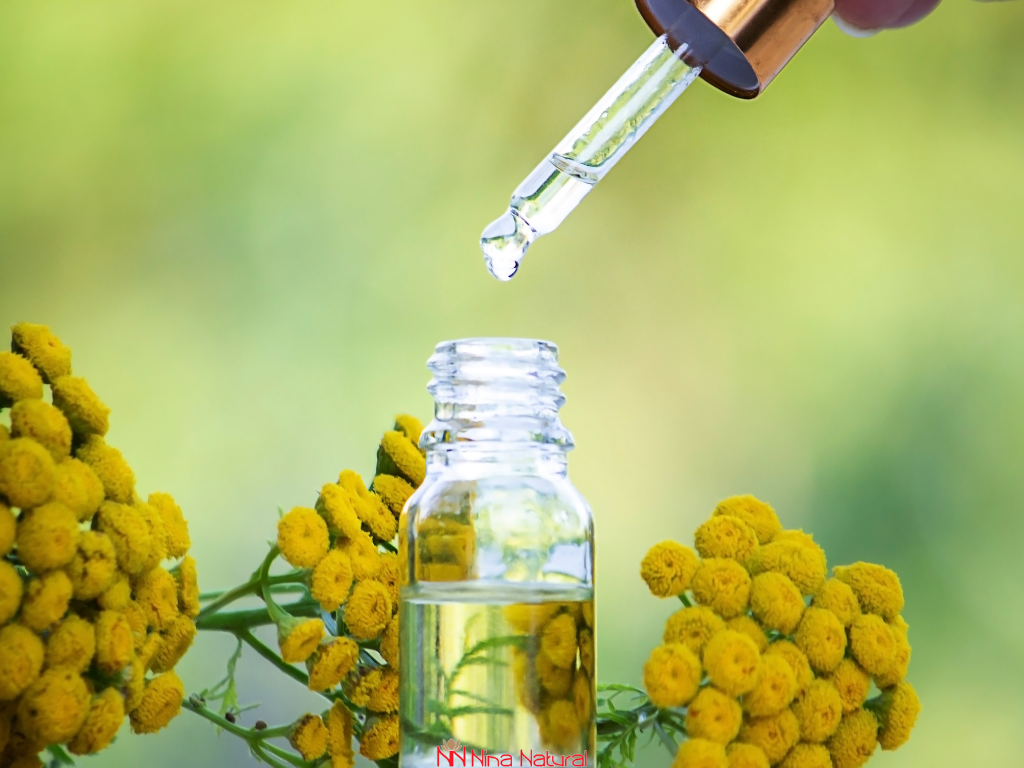
Nettle Extract
Nettle extract has a long tradition in hair and scalp care, especially when the goal is to strengthen and preserve the vitality of the hair strand.
Its presence in a formulation contributes to improved scalp condition, which forms the foundation for a healthy-looking head of hair.
During the colder months, when the scalp is more prone to dryness and tightness, nettle can help soothe it and strengthen the hair roots. This way, hair gains a more stable foundation and becomes more resistant to weakening and shedding.
Unlike ingredients that act only on the length of the hair, nettle plays an important role at the scalp level. Its presence in a formulation supports the strengthening of the hair roots and the long-term preservation of density, which is especially important when hair is under additional strain during the colder months.
Combined with plant-based oils that nourish the length, nettle extract rounds out the care by providing support to both the scalp and the hair strands.
Winter hair care calls for a more complex and attentive approach than during the warmer months. For this reason, winter care often combines multiple ingredients in order to address the various aspects of nourishment: from retaining moisture to protecting the ends and scalp.
The combined use of immortelle, argan, and coconut oils alongside jojoba and botanical extracts makes sense because each ingredient contributes to a different aspect of hair care during the colder period.
Immortelle and nettle support regeneration and strengthening, argan and jojoba help preserve softness and elasticity, while coconut oil, panthenol, and vitamin E contribute to protection and moisture retention.
This combination of ingredients is also brought together in the Nina Natural All-in-One Hair Oil with Immortelle, Argan, and Nettle, which combines multiple plant-based oils in a single formula designed for everyday care.
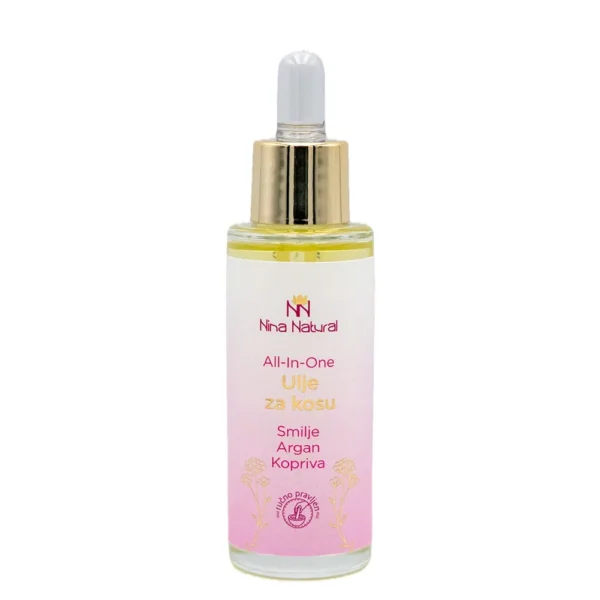
Nina Natural All-In-One Hair Oil – Immortelle, Argan, Nettle
- 30 ml
- Immortelle Oil, Argan Oil
- Jojoba Oil, Tea Tree Oil
- Coconut Oil, Orange Essential Oil
- Vitamin E, Panthenol
- Nettle Extract
- Regeneration of Damaged and Colored Hair
- Scalp Protection and Microflora Balancing
- Hydration and Protection from Drying
- Maintaining Shine and Softness
- Hair Growth Support
How to Choose an Oil Based on Your Hair Type
There is no single universal oil that works for everyone, as every type of hair has different needs. The most important thing is to pay attention to how your hair responds during the colder period and to adapt your care routine to its current needs.
Fine hair often looks limp and flat in winter and tends to clump easily, so it needs very moderate care. The oil is applied in a small amount, mainly to the ends and the lower part of the length, in order to protect hair from drying out without sacrificing volume. Too much product, or applying it directly to the scalp, can make hair look heavy and greasy, so moderation is key.
Dry and damaged hair demands more attention during winter because the cold and indoor heating further worsen existing damage. This type of hair generally responds well to richer oils and longer treatments, as it requires more intensive care. The oil can be applied more generously to the length and ends, especially before washing, to help hair become softer and more resilient.
Curly and coarse hair often has difficulty retaining moisture, which is even more pronounced in winter. Oils are its ally because they help smooth and soften the hair and help curls hold their shape. Applying oil to the ends and length helps hair look nourished and defined rather than dry and frizzy, even in cold conditions.
Mixed hair (oily scalp, dry ends) requires a special approach, as it is not uniformly dry or oily throughout. In this case, the oil is applied exclusively to the length and ends, while the scalp is avoided so as not to add extra burden to it. This way, the ends receive the nourishment and protection they need while the roots remain light and free of heaviness. Often just a few drops distributed through the ends is enough to make hair look neater and better cared for.
Color-treated and chemically processed hair requires a gentle approach, as its outer layer is already weakened. This type of hair tends to lose moisture and shine more quickly, so a well-chosen oil can help color look fresher and prevent the ends from appearing dry.
During winter, it is important to use oils that will protect hair from further drying and breakage, but without aggressive rubbing or excessive amounts of product. The oil is applied gently, primarily to the length and ends, so that hair remains softer, shinier, and less prone to damage.
How to Use Oils Properly in Winter
The method of application is just as important as the choice of oil itself, especially during the colder period. Depending on whether the oil is used before or after washing, its effect on the hair can differ significantly. This is why winter care is most often divided into pre-wash treatments, which provide deeper nourishment, and light post-wash application, which serves as everyday protection.
Using Oil Before Washing
Using oil before washing aims to protect and nourish the hair before it comes into contact with water and shampoo, both of which can additionally dry out the hair strand in winter. The oil is applied to dry or slightly damp hair, primarily to the length and ends, as these are the most exposed to breakage and drying. If the scalp is dry or tight, a small amount of oil can be gently massaged into the scalp as well, without harsh rubbing.
After application, the oil is left on for approximately 30 to 60 minutes, and for very dry and damaged hair, even longer. During this time, the oil helps the hair strand retain moisture, become softer and more resilient. After the treatment, hair is washed with a mild shampoo, twice if needed, to remove the excess oil without causing additional dryness.
Using Oil After Washing
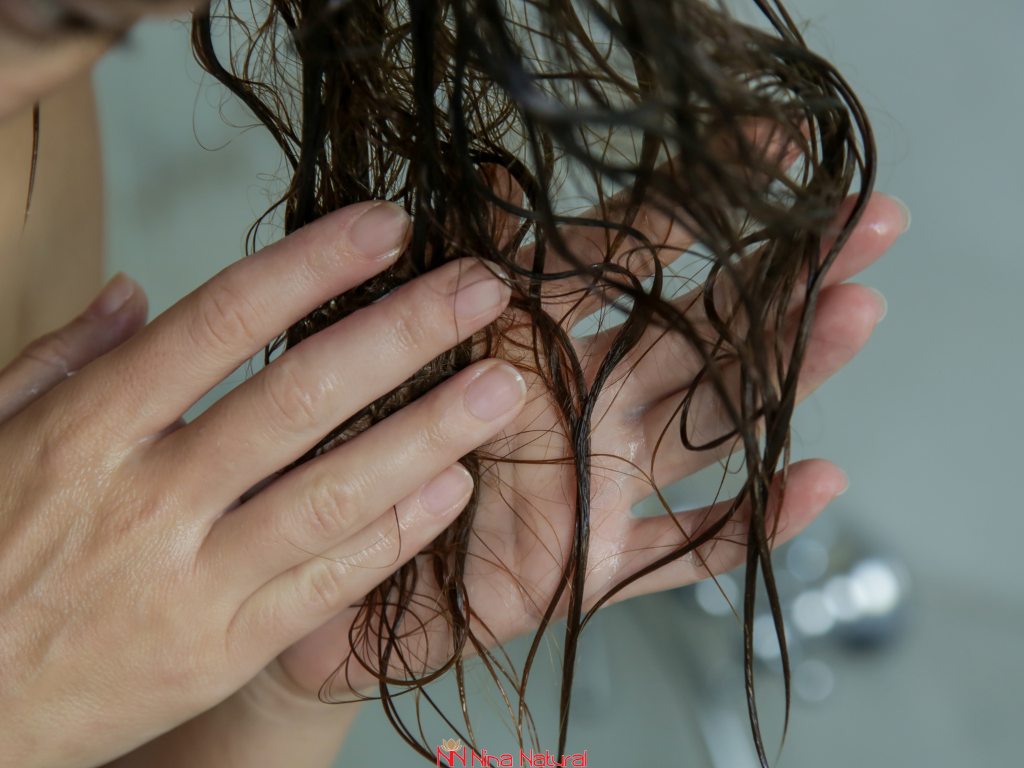
Oil can also be used after washing as part of everyday hair protection during winter. After washing, once the hair has been towel-dried and is still slightly damp, a very small amount of oil, just a few drops, is applied exclusively to the length and ends. In this way, the oil helps moisture be retained in the hair, smooths the ends, and protects hair from friction during drying, blow-drying, and wearing hats.
This type of application is not intended for deep nourishment, but for everyday protection and easier styling. It is important not to apply too much oil and to avoid the scalp, especially if hair tends to get greasy quickly. The goal is for hair to be softer and more protected, not oily or weighed down.
How Often to Use Oils
In most cases, using oils once or twice a week as a pre-wash treatment is sufficient. This frequency provides adequate nourishment without overburdening the hair. For very dry and damaged hair, treatments can be done more frequently, while for fine or quickly oily hair, it is important to remain moderate and use smaller amounts of product.
When it comes to applying oil after washing, this can be done more often, since a much smaller quantity is used at that stage. A few drops applied to the length and ends can be used after every wash, especially during the winter months when hair needs extra protection from dryness and friction.
The goal is to find a balance, enough care to keep hair softer and more protected, but without any feeling of heaviness.
Common Mistakes When Using Hair Oils
Although plant-based oils are valuable in winter hair care, their effectiveness depends greatly on how they are used.
One of the most common mistakes is over-application, driven by the belief that more product will yield better results. In practice, the opposite is true — too much oil can make hair heavy, clumped together, and prone to getting greasy more quickly. The amount should always be adapted to the thickness and length of the hair, and in most cases a few drops is more than enough.
Another frequent mistake is applying oil to the scalp without a genuine need to do so. If the scalp is already prone to oiliness, massaging it with oil every day can intensify that oiliness and make it harder to keep the hair clean.
Oil should primarily be applied to the length and ends, while the scalp is treated only when there is a feeling of dryness or tightness.
Washing hair too frequently in order to remove excess oil can also become a problem. If hair is constantly being washed because of too much product, the hair’s natural protective layer is further disrupted, which can lead to even greater drying. Instead, it is better to adjust the amount of oil used and to choose a mild shampoo that will not additionally burden the hair.
Heating oil at a high temperature is another mistake. Although warming it slightly between the palms can make application easier, excessively high temperatures can alter the properties of the oil and make it less effective.
Sometimes the problem arises when the oil is not matched to the hair type. What suits one type of hair may be too much or too little for another. That is why it is important to observe how the hair responds and to adjust the amount and method of application to its needs.
A common misconception is that oil “clogs” the hair. When used in moderation and applied primarily to the hair strand rather than the scalp, oil does not pose a problem. On the contrary, it can help hair remain protected and more resilient throughout the winter period.
Conclusion
The period of low temperatures brings additional challenges for hair, but properly chosen and moderate care can significantly reduce their impact. The key lies in understanding the needs of your own hair and adapting your routine to its condition during the colder months.
Plant-based oils and carefully selected extracts can help hair remain better balanced, less prone to drying and breakage, while the scalp maintains a feeling of comfort and stability. When both the length and the root are cared for holistically, hair more easily retains its softness, elasticity, and healthy appearance.
With proper and moderate care, hair can remain nourished and resilient even when exposed to dry air, friction, and low temperatures.